We earn a partner commission when you sign up through our links. Trading carries financial risk.
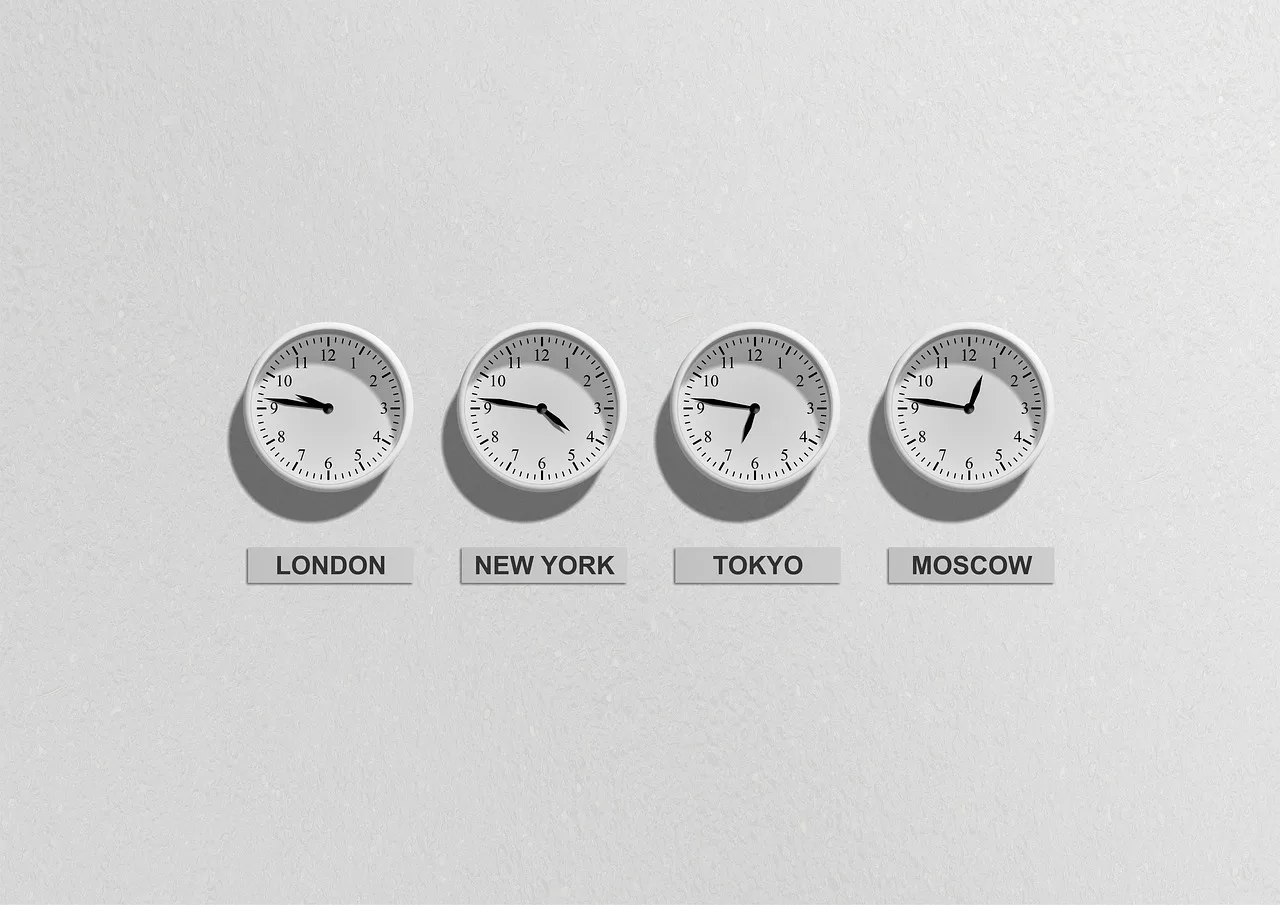
Forex has no single opening bell. Trading moves around the world with the business day, from Asia to London to New York. When many traders are active, spreads tend to be tight. When few are, spreads tend to widen.
All times in this guide are in UTC. The UTC entry in our glossary explains why we use it.
When is the forex market open?
Spot forex trades around the clock on weekdays, from Sunday evening to Friday evening. CMC Markets puts it as "open 24 hours a day from 5pm Sunday to 4pm Friday".
CME Group describes FX as "an almost 24-hour market". Its FX futures trade "Sun – Fr 5:00pm – 4:00pm CT with a 60-minute break each day", per its product page (checked 3 Nov 2026).
Your broker sets its own hours for each instrument, including holidays. Check the trading hours in your platform's symbol details.
What are the main forex sessions in UTC?
Traders usually split the day into three sessions: Asia, London and New York. These times are typical, not official, and sources differ by about an hour.
From 1 Nov 2026 until mid-March 2027:
| Session | Typical hours (UTC) | Source |
|---|---|---|
| Asia (Tokyo hours) | 00:00 to 09:00 | CME: Asian hours "00:00 – 09:00a.m. GMT" |
| London | 08:00 to 16:00 | CMC Markets: opens "8am UK time", closes "4pm" |
| New York | about 13:00 to 22:00 | Start is approximate (8:00 a.m. New York time); CME: 5:00 p.m. New York close |
| London and New York overlap | 13:00 to 16:00 | Both sessions open |
| Daily rollover | around 22:00 | 5:00 p.m. New York time |
The UK has been on GMT, which matches UTC, since 25 Oct 2026. New York has been on standard time, UTC minus 5 hours, since 1 Nov 2026.
Which session has the most activity?
London is the largest forex centre, and the London and New York overlap is usually the busiest window. Per the BIS survey of April 2025, global FX turnover averaged 9.6 trillion USD per day.
The same BIS release, which counts trades by the location of the sales desk, puts the United Kingdom at about 38% of trading and the United States at about 19%. Singapore had 11.8% and Hong Kong SAR 7.0%.
So when London and New York are both open, more banks and traders are quoting prices. CMC Markets notes that London's high volume means "lower forex spreads as liquidity is higher".
When are spreads usually widest?
Spreads are usually widest when few traders are active, and around big news. The quietest time is often the daily rollover at 5:00 p.m. New York time.
CME Group calls the rollover "often the least liquid hour of the FX day". It adds that "a spread of a fraction of a pip during liquid hours can expand to several pips through the rollover".
A study of the EBS trading platform by Ito and Hashimoto (NBER, 2006) found that the bid-ask spread is generally negatively correlated with activity. Put simply, fewer deals usually means wider spreads.
That study also found activity drops at lunch hours and does not pick up on Friday afternoons in New York.
Scheduled news is the other big cause. CMC Markets notes that "major economic news announcements could cause the spread to widen", even during busy hours.
How does daylight saving time change the sessions?
Daylight saving moves the London and New York sessions by one hour in UTC, and the two countries change on different dates. Asia hours stay at 00:00 to 09:00 UTC in our table.
Per NIST, US daylight saving time in 2026 ran from 8 March to 1 November. The US rule is the second Sunday in March to the first Sunday in November.
Per GOV.UK, UK clocks went back on 25 October 2026, and they go forward on the last Sunday in March.
That gives these dates for the coming months:
| Period | London (UTC) | New York (UTC) | Rollover (UTC) |
|---|---|---|---|
| 1 Nov 2026 to 13 Mar 2027 | 08:00 to 16:00 | about 13:00 to 22:00 | 22:00 |
| 14 Mar to 27 Mar 2027 | 08:00 to 16:00 | about 12:00 to 21:00 | 21:00 |
| From 28 Mar 2027 | 07:00 to 15:00 | about 12:00 to 21:00 | 21:00 |
For two weeks in March, the gap between London and New York is four hours, not five. The same happened from 25 Oct to 31 Oct 2026.
How can I use session times to manage my costs?
Know the hours when spreads tend to be wide, and check the live spread before you trade. You do not need to trade at any particular time.
A few habits help:
- Look at the spread in your platform before you open a trade, especially near 22:00 UTC.
- Check the release time of big data, such as US jobs reports. Our week ahead post lists this week's US releases.
- Remember that a wider spread costs more on a bigger trade. What is a pip? explains why, and the pip value calculator turns pips into money.
- Use the profit and loss calculator to see a trade before costs, then add the spread.
To see how spread size changes your cost per trade, read Spread vs commission.
What else do traders ask about market hours?
Is there a right time to trade forex? There is no time that makes a trade more likely to win. The busy overlap usually has tighter spreads, but prices can also move fast. Read our risk disclosure.
Can I trade forex on weekends? Spot forex usually stops from Friday evening to Sunday evening, as above. Check your broker's instrument hours.
Do holidays change the hours? Holiday hours can differ from normal hours. Watch your broker's notices. If you trade at Exness, our Exness page explains how rebates work there.
What is the short version?
Forex runs from Sunday evening to Friday evening. Activity moves from Asia (00:00 to 09:00 UTC) to London (08:00 to 16:00 UTC) to New York (about 13:00 to 22:00 UTC), in winter time.
Spreads tend to be tightest in the London and New York overlap and widest around the 22:00 UTC rollover and big news. Check the live spread, and use our trading tools to see what it costs.
Sources
- CME Group: Unlocking Asian hour trading with CME FX futures (25 Jul 2023)
- CME Group: When FX Futures Pause, spread risk around the daily close (29 Sep 2026)
- CME Group: Welcome to CME FX futures
- CMC Markets: Forex market hours
- BIS: OTC foreign exchange turnover in April 2025
- Ito and Hashimoto: Intra-day seasonality in activities of the foreign exchange markets (NBER w12413)
- NIST: Daylight Saving Time
- GOV.UK: When do the clocks change?
- Cover image: jarmoluk on Pixabay
Share this post
Get part of your trading fees back
It is free. Each broker page shows how and when the rebate is paid.
Get your rebate